The challenge
Simple Booth makes HALO, a photo-booth system that sits at an unusual crossroads: it's a physical hardware kit that runs several thousand dollars, and it's a recurring software subscription. That means it sells to two audiences at once. On one side, consumers and side-hustlers buying a booth to run their own events or start a small business. On the other, corporate event planners, venues, and schools booking booths for holiday parties and company events.
When we started, the account was stuck in retargeting-only mode. It was converting people who already knew the brand, but nothing was bringing new audiences in. The high price tag created hesitation at checkout, and a single, one-size-fits-all funnel couldn't speak to a hobbyist and a corporate buyer in the same breath.

The strategy — two motions, one system
Rather than force one funnel to do two jobs, we built parallel motions with a shared measurement backbone. First we rebuilt the account from retargeting-only into a full funnel — awareness, then prospecting, then retargeting — which lifted site sessions 27% by bringing genuinely new audiences in.
DTC · Meta
Consumers and operators
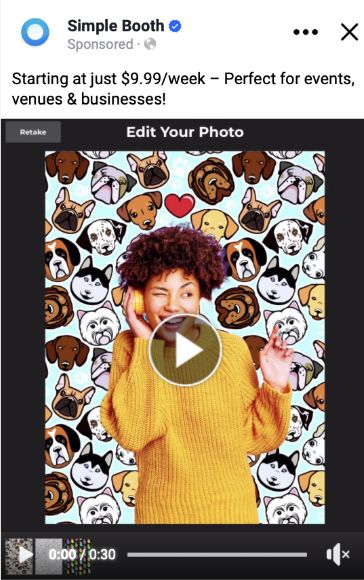
Creative aimed at people who want to run their own booth — "Stop Paying Photo Booth Rental Fees," "Turn Events Into Profit With DIY Photo Booths." We bundled the hardware with the app so checkout became a single decision instead of two.
B2B · LinkedIn
Corporate event buyers
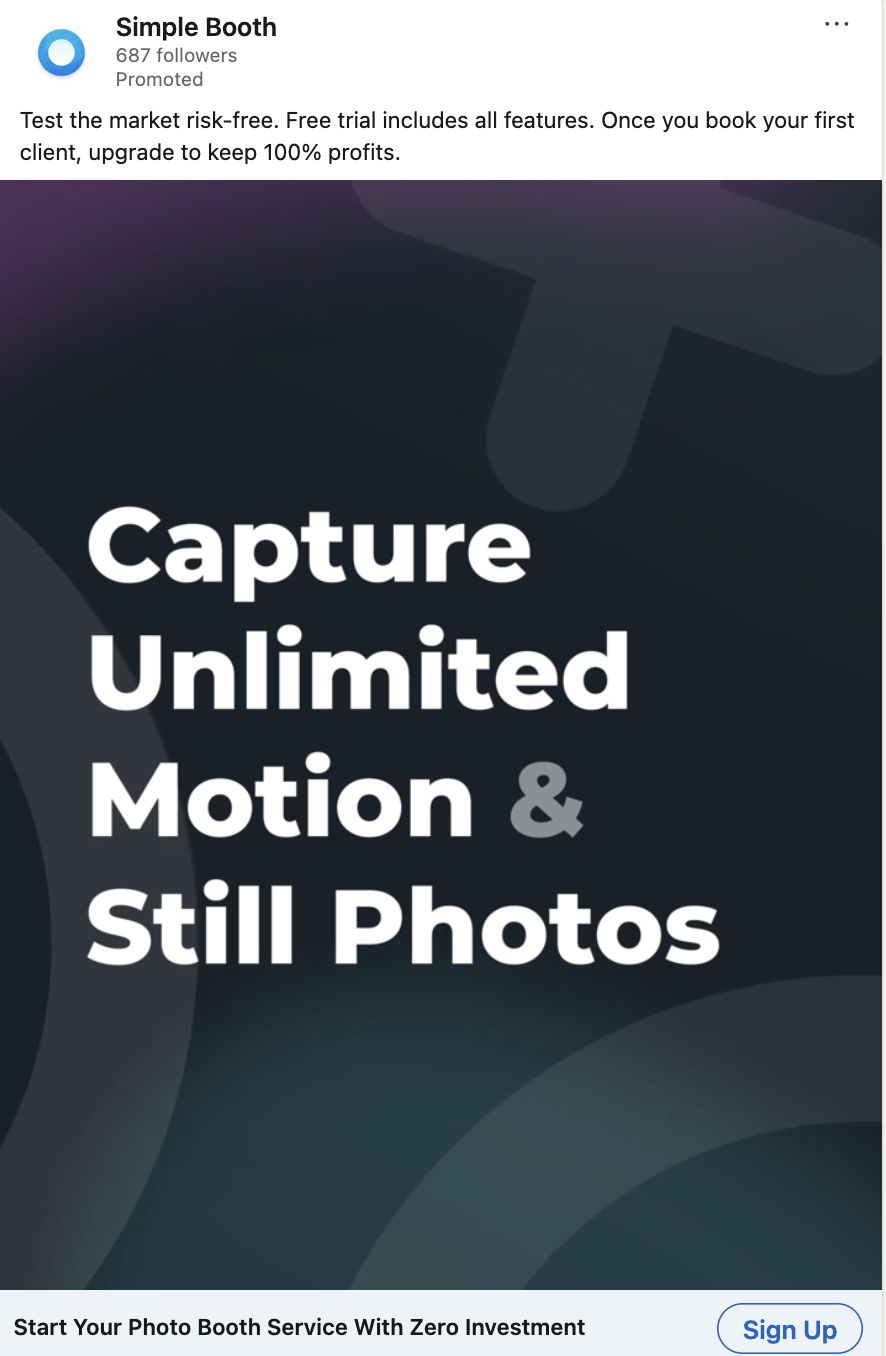
Separate software and hardware campaigns targeting corporate event planners, venues, and schools for holiday parties and company events — reaching Technology, Business Consulting, Events Services, Higher Ed, and IT audiences.
Real ads that ran
DTC angle on Meta — the operator opportunity
B2B angle — "perfect for events, venues & businesses"
Measurement across every channel
With spend split across Meta, TikTok, Google, and LinkedIn — and a hardware-plus-subscription product where Shopify's last-click attribution understates the picture — we layered in multi-touch attribution (Triple Whale and Hyros). That let budget follow the channels actually driving results instead of whichever platform claimed the last click.
Key insight
A product that serves two markets doesn't need two agencies or two disconnected campaigns — it needs one system with two lanes. Meta carried consumer demand, LinkedIn carried the corporate accounts, and a shared attribution layer kept both honest. The same creative discipline that lowered a consumer's cost to trial the software also sharpened how we reached a venue booking a booth for a holiday party.
The results
Every figure below is what our campaigns produced, reported by the ad platforms. We've deliberately left the brand's total store revenue out — that's Simple Booth's number, not ours to claim.
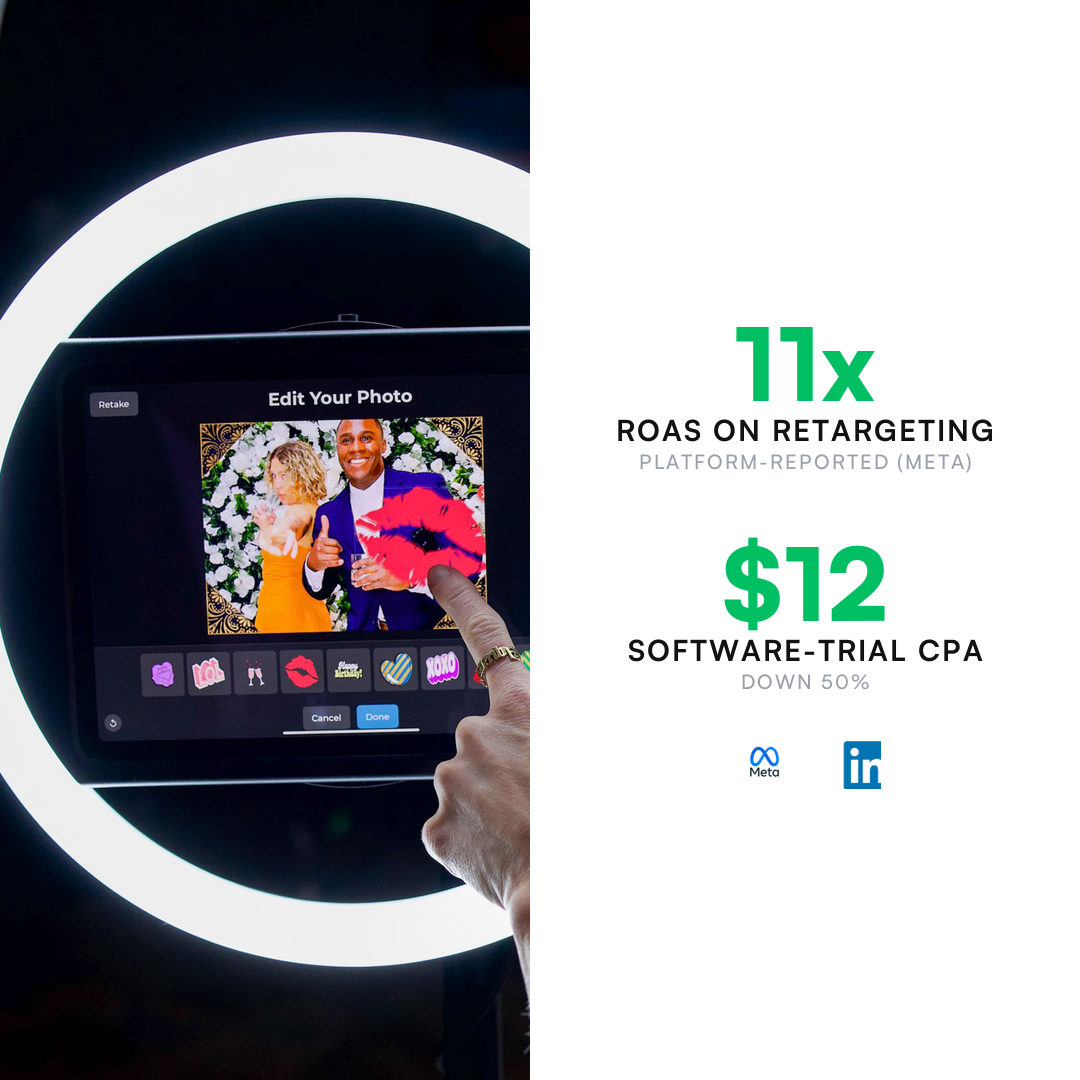
- 11x ROAS on retargeting, held consistent — platform-reported in Meta
- Software-trial cost down 50%, to $12 — the clean, pure-SaaS efficiency metric
- 27% more site sessions after adding prospecting and awareness above retargeting
- B2B reach on LinkedIn at a 0.73% CTR — above the 0.5% benchmark — across corporate planners and venues in 9 industry verticals
Platforms
Meta Ads
LinkedIn Ads
TikTok
Google Ads
Frequently asked questions
Can one brand run DTC and B2B paid media at the same time?
Yes, when the product genuinely serves both markets. We ran DTC on Meta for consumers and operators, and B2B on LinkedIn for corporate event planners and venues, in parallel. The key is separate creative and funnels per audience, with a shared attribution layer so budget follows real results rather than last-click.
How do you market a product that is both hardware and a subscription?
Bundle the two so checkout is one decision, and measure each revenue type separately. A full funnel brings in new audiences for the high-ticket hardware; retargeting converts high-consideration buyers. The software-trial CPA is the cleanest efficiency signal for the subscription side.
Why use LinkedIn for a photo-booth product?
Corporate event planners, venues, agencies, and schools book booths for holiday parties and company events, and LinkedIn reaches those buyers by industry and role. Running LinkedIn for the corporate lane alongside Meta for the consumer lane let one brand serve both markets at once.
Selling to more than one market?
We'll audit your current paid channels and show you how DTC and B2B can run in parallel without stepping on each other. Free.
Get a free audit